Meet Michel Adler
A profile by Annie Hoyer
Michel Adler, who goes by Mike, was born in Lyon, France in 1941. His parents were Austrian. His father recognized antisemitism in Austria was stifling his legal career, left Vienna and came to France in 1930. He married in 1933 when Mike’s mother joined him. At the start of WWII, eager to combat fascism, his father signed up to serve with the French Foreign Legion.
He was still in training in Morocco when France capitulated to the Germans, thus ending his service. Though there was some deportation of Jews, Lyon was in Vichy France and there his dad’s service protected the family. That changed in the fall of 1942 when the Germans occupied Lyon. Now his parents knew they had to escape. Around the time Mike was 16 months old (and an older brother was 6), a guide took them across the border to Switzerland, where they were accepted as refugees. His parents lived with other refugees in various camps; Mike was placed in a Salvation Army-sponsored nursery school and his brother in a Jewish school for boys.
Mike’s earliest memories are of a house in the Swiss mountains the family was provided through the Evangelical Free Place Action working with the Jewish Relief Organization of Zurich. The house had no indoor plumbing or heat, but Mike fondly remembers winters sledding near the house and hiking with his family. His parents rightly feared for their relatives: his maternal grandparents died at Treblinka and many other relatives perished as well. But he said his parents were protective of him, and he was unaware of the horrors going on in Europe.
“Switzerland was gracious in accepting refugees,” Mike explained, “but they made it clear you had to leave after the war ended.” The International Rescue Committee helped the family relocate. They settled in the Bronx. Other families they knew from Switzerland and Austria also lived in New York City and formed a regular community of fellow refugees.
Mike’s parents were advised to take English classes for 6 months before their arrival. Perhaps that gave Mike the idea to carry a tiny dictionary with him when he started 4th grade at his first American school. He learned English quickly, and reported the teachers were kind to him.
“I got along pretty well,” Mike said, but he did have an issue with his name. American students teased him that Michel was a girl’s name. So, when the family moved to Queens in 1955, he asked to be called Mike. He never changed this officially, even when he became a citizen in 1957. “I’ve kind of come full circle with my name,” he explained. “I like my full written name to be Michel, but I prefer to be called Mike.”
In 1964, Mike graduated from the City College of New York with a degree in electrical engineering. A first, civil service job was unsatisfying, but his next position, at Raytheon, in Sudbury, provided him with stimulating work. He liked Boston, eventually bought a house in Lexington, and worked for Raytheon for 37 years.
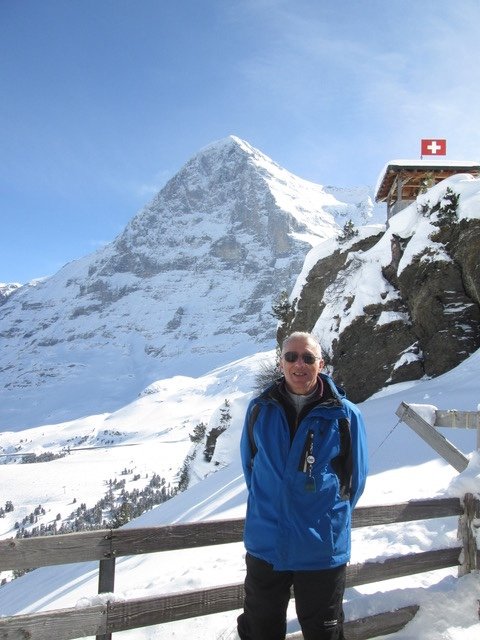
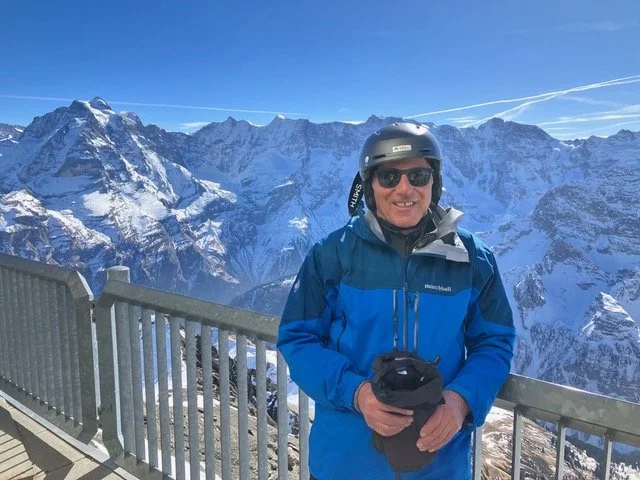
In his free time, Mike enjoyed traveling. He also played tennis, attended musical events, and indulged his love of skiing. In 1972, he joined a ski club in Franconia and skied at Cannon Mountain. He began spending most winter weekends in NH. Eventually he rented a place to stay, then he bought a home in Franconia, and in 2017 he sold his Lexington home and moved to Franconia full-time.
It was at Cannon Mountain that he got to know Gail Robinson and Martin Kessel. Mike told them he’d translated from German to English a book his father had written about his family’s flight from the Holocaust. They asked Mike to present his story to the BHC congregation. In this way, Mike was introduced to BHC. Gradually, he began attending services and becoming involved. In 2013, he became a BHC member. He has since become indispensable, writing monthly financial reports, getting bids for work on our fragile building and showing up on chilly evenings to help with services.
Mike has had an active retirement in addition to his myriad BHC duties and his skiing. Early on, he volunteered once a week in a middle-school science classroom. He belonged to the Brandeis Osher Lifelong Learning Institute. He has designed a course there, Communication Technology and Its Impact on Society, from papyrus to the iPhone. He speaks German but said his French is not as good, so he’s Zooming a class where participants read and then discuss the book assignment in French.
In 1993, Mike joined the United States Holocaust Memorial Museum. He has been on trips with the museum, and he donates to it each year. “My parents’ story made me much more aware of the important need for antisemitism education,” he said. He has not forgotten the anxiety and dislocation his parents endured to keep his family safe.